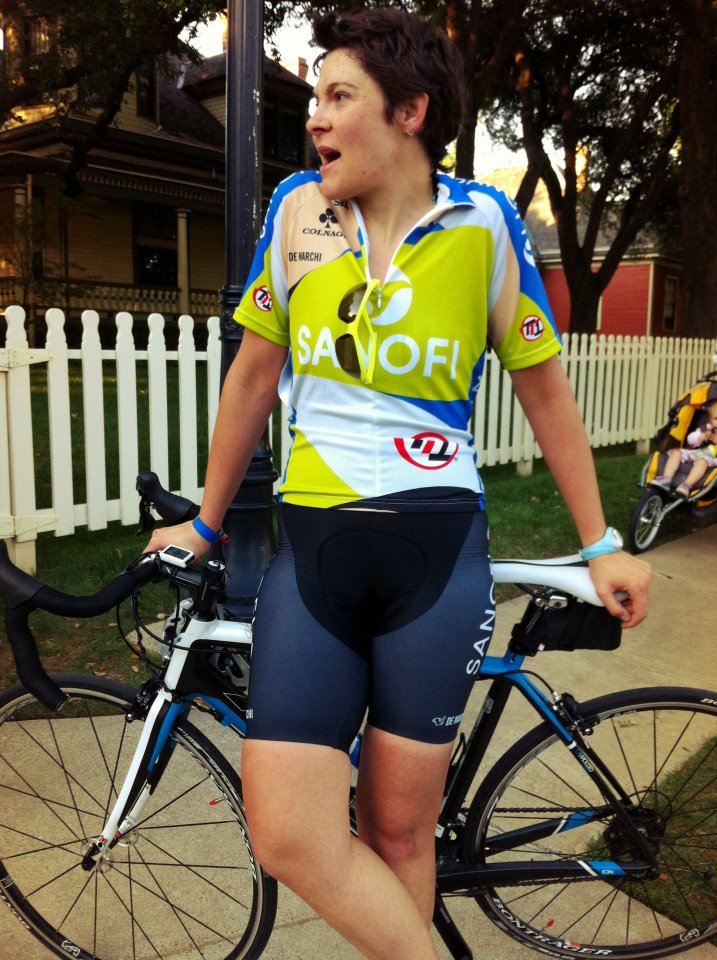
Monday, April 30, 2012


“You can’t stop the waves, but you can learn to surf.” 
John Kabat-Zin


There was a time when I not only thought I could stop the waves, but was certain that I would be carried away by them were I unable to contain the tide. Life doesn't work that way. The truth, of course, is that we all have some spectacularly awful days, weeks, even months - and to try and pretend otherwise is folly, fundamentally dishonest and serves nobody.

The secret is not to prevent challenges. It's not to contain life in a narrow sphere of safety so as to cope with as few struggles as possible. The answer is to pull the rabbit out of the hat, and reframe the circumstance.

You will almost certainly go through illness, lose loved ones, have things go wrong at work, have arguments and days where you wished you’d stayed in bed. There’s nothing wrong with occasionally feeling down for a period of time. In fact, that’s a critical piece of living fully, and it’s perfectly good for other people to see that vulnerability. The problems occur when you allow that sense of loss to continue past the point of reason, and start thinking your baggage is worse than everybody else’s melancholy.

I read a blog post earlier in the week, penned by a woman who was talking about her experience after Lasik surgery, and the guilt she felt for having cured her poor vision when her diabetic son could not be cured of his disease. On the heels of this snippet, a medical journal crossed my desk detailing advances in the search for autism treatments. I wondered...

Would I cure my own diabetes were I able? Yes. But then, all these years, my husband and I have declined to seek any "cure" for our son's autism. We value those traits integral to his very self. We wouldn't want him any other way than the person he is right now, today. Would he feel the same? Would he wish life to be easier, and cure those "disordered" bits and pieces of himself?

Of course, it matters not. It's all hypothetical, anyway. But it got me thinking about the waves...

Much as I might wish to cure my diabetes, I wouldn't trade for a moment the experience of having this disease. It has made me healthier and more attentive to my physical self. It's made me stronger and more compassionate to those I encounter, struggling with illness of their own sort. Although I often wish I could not deal with the daily blood sugar battles - just as Henry probably laments at the occasional burden of autism - I have come to value the lessons and opportunities inherent in making this journey.

I can honestly say that when I look back on every single challenge I had, even the ones that knocked me off my feet, I realize they all played an extremely important role in my life. In the moment, of course, I really didn’t care about getting stronger or learning lessons. I knew only that things were not going the way I wanted them to go on that particular day, in that precise moment. Only later would I understand that everything - every experience - is useful in the right context.

Difficulties don't have to be a source of paralysis. At the time, what seems like an unwelcome intrusion in life can, in fact, serve as an opportunity to discover the self, our individual potential, and those things which matter most.

Instead of resenting the difficult times, you can step back, see those moments in another context and for what they are, and make the most of the circumstance you have been provided. You don't have to allow the unexpected, uninvited or painful to knock you off your feet. You just need to become a more adept surfer. 


Wednesday, April 25, 2012

"You stink like poop. POOP!" Raucous laughter from Henry. The word : Poop. And funnier still because he has proudly lobbed the insult at his younger sister who, I'm sorry to report, has a mouth far more filthy.


"Shut the fuck up, Henry."


I am the worst mother on the face of the earth.


I have to confess I felt a little proud of their verbal acumen. Henry, in particular, tends to sound a bit like a Twitter feed, and rarely undertakes the effort of producing a full sentence...and especially for the purpose of non-essential dialogue. His sister seemed to have a identified an often under-utilized anger management tool, albeit one likely to get her tossed from the prestigious confines of Bloom Montessori. And while I have been known to employ some rather crass language, I recognize that it is imprudent to let my four-year-old go through her preschool years dropping unchecked f-bombs, particularly since the main argument against swearing is more about showing off that you're classy if you don't swear - that you can control the vast waves of anger swirling inside you without saying a cuss word. I wouldn't want to be low-brow by allowing her to swear with impunity.

The good news is that Midori responds generally well to bribes and threats. We just explained that those are grown-up words used in specific circumstances, like when Daddy hears that the Broncos have drafted another stupid running back when they’re already loaded at running back and obviously need help on defense, or when the cop in the rear view mirror is stopping to turn around in the median and come back toward mommy and we’re not close enough to the house to hit the gas and make a run for it, plus your dad's not even home to open the garage door for us.

Henry, on the other hand, is a whole other ball of wax. Once he realized that the word "poop" is funny (and it is funny...just say it in a room full of grown men in suits, and watch the stifled giggles), he couldn't get enough. "Poop. Poop."

At first, it was just the acontextual use of the word. Then, he got clever with it: "Spongebob Poop Pants." "Hula Poop." "Can I have a lollypoop? Or some poopcorn?"

Sigh.

The school has taken it upon themselves to track the number of "inappropriate utterances" Henry produces in a given kindergarten day. Usually, he hovers around 50...about ten "poop" utterances each hour. Not so bad. But Friday, he came home armed with data and an angry note from his teacher.

Apparently, they showed a film depicting the good works of Heifer International, as they are undertaking a charitable project with the organization. In the context of the documentary, there is a lengthy discussion about methane produced from cow dung. You see where this is going, right?

To Henry, this must have been the funniest goddamn video ever produced. He was laughing so hard, in fact, he fell out of his chair and nearly knocked himself unconscious on the side of another child's desk. His teacher was not amused. Two hundred & seventy-eight utterances later, the letter and data sheet was followed up with a phone call.

What, exactly, are you going to do with him, because this has quite simply gotten out of hand?

What am I supposed to do, exactly?

After much discussion and several failed attempts to prevent myself from erupting in laughter on the phone with Henry's headmaster - a conversation, by the way, which probably involved another two hundred utterances of the word "poop," - Dennis and I decided to evoke a zero-tolerance policy for "poop talk." First offense: We tase him. Second offense: No college for you, little man. Third offense: You are no longer a member of this family. Please leave. Now. 

You'll have to excuse me. I need to go waterboard Midori now.

Monday, April 23, 2012


I will title this "Lost In Texas," because that pretty much sums up my weekend. I was either A) racing or B) meandering through Dallas wondering, "where the hell am I?" (Note that neither of those experiences involve eating or sleeping.)

I arrived in Dallas late Friday night, and found my teammate, Scully. We gathered our bikes and bags, and made our way to get the rental car. From there, we headed to the hotel to assemble the bikes for a seven in the morning race start. It was after midnight, we were both groggy and the blood sugars were a bit low (despite a full order of nachos in the Denver International Airport Lounge)...and neither one of us were really enjoying the do it yourself project before us. My handlebars refused to tighten, and with my small set of tools, I couldn't get any leverage. I fought with them for a good half an hour, and moved on to the seat. By that time, I was hurried. Ready to sleep. In retrospect, I rather wish I had given that seat post an extra three minutes of attention....but more on that in a bit.

Finally, with bikes ready, we headed to bed. Four hours later, we woke up and threw on our kits. (Oh, you unforgiving spandex. I hate you, you bastard.) I grabbed a bagel and some PB, and was ready to roll. We consulted the event flyer and it's hastily drawn map to try and locate the start, which was a mere two miles from our hotel.

Scully and I rode around, turning down One Way streets and alley ways, looking at signs pointing toward the Dallas West End Historic District. It took only minutes for us to realize we were hopelessly lost.

I sent Scully (who, luckily, has a better sense of direction than I) into a McDonald's in search of guidance and bad coffee. Armed with insight into where we were headed and a cup of joe, we rode another aimless stretch of Dallas pavement.

Finally, we spotted the start line with fifteen or twenty minutes before the race. We also spotted the Colavita Women's Cycling Team who, I might add, are FREAKISHLY fast. In fact, it was a pretty mean looking group of women, generally. Oh well. Can these fast girls polish off a full order of nachos in the airport lounge and still have room for vegan gelato? Yeah, that’s right, who’s the elite now?

After getting a ton of flack from a race judge about my number being "too high," and having her re-pin me with a good deal of irritation, I dorkily lined up at the start. Whistle blew, and we were off!

Scully and I had a fast few laps. The course was a figure eight with a slight downhill and a slight uphill, lots of turns, and only one real spot to move up in the pack. On the bottom of the downhill, there was a tight right turn. At every pass, I leaned in so far I could hear my pedal scrape the bottom of the road. 

By the fifth lap, I was fighting for position. I had gotten shuffled to the back. I made the mistake of coasting too far on a straight stretch where I really should have been pedaling hard, and I got dropped. With no chance to catch the pack until the next lap, I knew I was hosed. The continuous pedaling as I was stuck chasing basically felt like I was doing a workout on my bike trainer but pushing it much harder. At one point, I looked over and saw Dan Schneider from the Elite Team, as he yelled, "One long interval, Becky!" Indeed. Worse, my seat was shifting up and down through the whole race. Yes, it would have been prudent to have given that more attention the night prior. Jerry Willis from the Elites pointed that out, looking at the angle of my saddle as he said, "That's looks comfy."

Naturally, while riding I became a snotty mess, so I tried to occasionally shoot snot rockets but ended up just blowing snot all over my face and hands and feeling like a welfare child in Alabama. I was a snotty, tired, demoralized mess. Still, though, I was watching Scully a few meters ahead. She was having a pretty solid ride, and I the course itself was fun.

At the end of the race, I was disappointed with my performance but glad to get another crack at it the next day, and I was looking forward to watching the guys race later in the afternoon. Better yet, we had an event planned with Sanofi, involving kids and bike building. We made our way to another part of downtown Dallas - less scenic, in a lower income neighborhood.

We were greeted by a gymnasium filled with kids and volunteers, all busy assembling bikes for children in need.


It was an awesome event with a lot of wonderful, sweet kids and fabulous volunteers. We put together a few bikes, and spent a lot of time speaking with the kids present and the adults working among them. We devoted a good 20 minutes mugging for pictures, talking about bikes and racing...and soccer. All the kids were really big soccer fans. (I know nothing about soccer.)
I spent the rest of the afternoon lulling about downtown Dallas. We grabbed some lunch with the guys, and I went for a nice afternoon walk around town before the mens' races. Eventually, Scully and I made our way back to the start line (after getting lost again in downtown Dallas and ending up about 15 miles out of our way).

Watching the guys race was a ton of fun! Dan's dad was there, and we spent some time chatting about their impending move to Colorado. The weather was nice, and with the sun up, you could see the manicured lawns and parks surrounding the race course.

The guys had great individual races. Dan and Ben were fighting for position the whole time, and both won primes. Bradford nearly won his race, getting edged out at the very end. Dustin rode well but, in the end, lost position and couldn't fight his way back. Jerry and his brother Tommy were flying alongside one another for much of the race.

By this point, we were all starving. The guys needed to shower, and so Scully and I were stuck patiently waiting to eat. By the time they were ready to roll, we were ravenous. That was unfortunate, because we ended up at the worst pub in America. The only redeeming aspect of the experience was in watching the server crawl in and out through a WINDOW to retrieve our food, as there was no door to the patio seating. I’ve learned the hard way that certain foods will bite me in the ass once I’m exercising, and I don’t want to feel miserable riding around in circles at various intervals while stifling nasty-flavored burps. With that in mind, I opted for a veggie burger. It came out ice cold in the middle, but the waitress was kind enough to crawl back through the window, nuke the half-eaten slab of soy for a few minutes, and slap it back down before me. Good thing I was hungry.

The next morning, Scully I repeated the events of the morning prior...but we were maybe 10% less lost. The good news is that this left us ample time to get to the start, warm up on the course, and get prepared for the final day of racing. I was nervous given my fiasco of a race the day before, and really wanted to have a faster day. Scully seemed a bit more confident.

We lined up at the start, and the race commenced. I took a position near the line this time, because I knew from experience that playing chase was not going to work on this course. Apparently, the girl behind me was regretting not doing likewise because, less than a meter into the race, she attacked from behind. WHO DOES THIS??? Who surges a meter into the first lap. We are here for forty fucking minutes, Chief. You've got lots of time for your amazing breakaway. Only in a Cat 4 would you see this kind of stupidity.

Stupid girl goes flying into a tight opening between the girl on my right and another woman to the right of her. Only, there is no opening. She completely misjudged the gap, and of course NO ONE is expecting this kind of reckless surge at the beginning of the race. The woman on my right has lost all balance, and is just trying to maneuver away from the careening stupid girl about to take her out. In a moment of panic, she grabs my bars, all the while yelling, "Whoa, whoa!" I look over and raise my elbows slightly and calmly but urgently instruct her: "Dude. You need to let go of my bars. What are you doing?" That was the last thing I said before I keeled over and ate pavement in front of a group of spectators and friends who quickly went from “Go Rebeccaaaaaaa yaaaaayyyyyy” to “…..oh.” As I lay on the ground, I looked up and immediately saw a concerned volunteer stick his face an inch away from mine and shout, “ARE YOU OKAY?"

The girl next to me had pulled to the right, and flipped me and my bike. I skidded and rolled a couple of times (thanked her for breaking my fall), and then found myself mysteriously under her bike.


I hopped up and started inspecting my bike and kit. (I had wrecked earlier in the week on a training ride, and had to get a new kit sent to me for the race. I didn't want to have to make another call thanks to a torn bib and jersey.) Good news was that the bike seemed mostly okay, despite my bent bars and my wheel that was no longer tracking so neatly...and no holes in the jersey or bibs. I looked at the volunteer, who pointed to the pit, and I started making my way to a guy gingerly shaking his head. "Good news is you get a free lap," he told me as he loosened me up on the bike and prepared to shove me back into the paceline. "Just don't stand up or pedal. When I push you, you just coast and catch. You got that. Let's not do this twice." Right.

Meanwhile, the girl who'd taken me down was on the sideline, having a heated discussion with her coach. She was sobbing, "This happens every fucking time. I'm done. I'm not doing this anymore. Every time." Uhhhhh...maybe if you are rolling people EVERY TIME you should re-evaluate your race strategy. Just sayin'.

I got back in the race, and actually fought my way to the middle of the pack. The whole time, I heard the sound: "Thwup, thwup, thwup..." Every rotation. My back wheel was no longer true, and it was hitting the brake with each revolution. Awesome. I was trying to decide whether or not to go back to the pit and risk having it judged as something other than a mechanical failure...and playing chase for a second day...or just riding against my brake. I chose the latter, mostly because I was having an okay race despite the mechanical issues. Somewhere in the middle of the race, I managed to win a t-shirt prime. I was pretty pleased given the crash and the brake situation.

I kept it up until the final two laps. At that point, I saw Scully who I knew had been behind me with three other girls. She passed me, and I realized that I had lost a ton of ground in the last couple of laps. Fighting fatigue and my brake, I finished about a second or two behind Scully. Still, it was a good race considering all that had gone wrong.

In fact at one point in the middle of the race, I saw an unattached rider leave the course and take a DNF. She had been slow...I, personally, had lapped her three times. I was disappointed to see her quit. I was thinking, "You got here. You showed up. Finish it!" Same goes for the tearful trainwreck who grabbed my bars. Yes, it's harder to keep at it after you crash...your more careful, it's a tough race mentally (and more so when you crash a meter into the start)...but not finishing is an option reserved for true injury or total mechanical failure. Not a bad day of racing.

In all, it was a fast, fun course with lots of awesome turns. A beautiful day in Dallas. No complaints.

Scully and I went out for a ride thereafter. We got lost. AGAIN. We rode about 50k, and 20 of that thinking we were headed back to the hotel when, in fact, we were going the completely opposite direction. Luckily, this guy stopped and got us back on track. (You don't see a lot of spandex-clad cyclists in Texas. This dude knew right away we were from out of town. When he told us we had gone a "long, long, long way" in the wrong direction, he added, "I don't know how you'll get back. It's more than TEN MILES." I can do that in my sleep, chump. At least, I thought so...)

Meandering back through confusion, low blood sugar, tired legs and the entire right side of my body locking up after the morning carnage, it was the LONGEST ten miles of my life. This is Scully, low and about to die:


By the time we got back to the hotel, we were ready to pack the bikes and head home. In all, it was an awesome, busy, fun and fast weekend. I had a great time. I made it home with some mystery chafing on my back as well as a nice bruise on my left knee from the fall, and then a host of cuts and scrapes. Most of my friends have been polite about the mishap, but the hilariously mean ones have been giving me shit nonstop. I'm tired. But I race again on Wednesday...


Wednesday, April 18, 2012

Generally, most days are good. I am contended in the wonder of our life - my husband and I and our two beautiful children.

Most days, I look upon my son and daughter and I feel that I am actively participating in a miracle, as I get to take them by the hands through these early years of living. 
Rarely, I felt like much of what I am doing as a mother is necessary, but painful. Those days are few...but today is one among them. No matter what challenges we face, I know there is always a "best I can do." Getting mad at myself for being incapable of giving more, moving harder against the current,  won’t lift my spirits or motivate me to take positive action. It will, however, make my journey more miserable. So I push on...but some days, some days...

Some days are just hard.


It is ironic that I write this today, perhaps, as the Supreme Court decides the fate of President Obama’s Affordable Care Act.  Amid all of the fierce rhetoric and debate is the inescapable truth that the financial security and potential health outcomes for millions of ordinary Americans also hang in the balance. And there, swinging with pendulum, my tiny family of four...

Henry was to undergo a battery of evaluations today, with the hopeful outcome that he would be awarded grant money sufficient to secure ongoing behavioral, speech and occupational therapies. (Direct medical and nonmedical costs can add up to as much as $72,000 a year for someone requiring multiple therapies - like Henry - and even $67,000 a year for those on the lower end of the spectrum, according to a study from the Harvard School of Public Health.) The right to have the tests administered at the University of CO by autism and neuropsychiatric experts was a had-fought battle, and it would be dishonest if I didn't admit that I have grown tired of fighting at every possible turn for things that seem so very simple...reasonable. Despite winning the right to have Henry assessed by the best experts in the state, we knew that children with autism are notoriously difficult to evaluate. We were advised that fewer than 4% of children under age ten are able to complete the tests and be provided an IQ score, and most of those children (88%) will be diagnosed with Mental Retardation. The county, however, requires an Intellectual Quotient score over 85 to provide financial support to families of autistic children. With those odds in mind, we pinned our financial hopes on our six year old son because our private insurance and the US government, the state and the county, have failed us.

We took Henry out to breakfast this morning, and explained that he would be seeing a group of doctors who wished to play some reading and math games. We asked him for his cooperation. Henry, to his credit, has been subject to more evaluations in his short life than I can begin to count...and some years ago, I promised him that we would be prudent in our choosing those measures down the line. We would not brow-beat him into normalcy, or make therapy and performance measures a full-time job. I promised that he could just live as a child should live...without the burden of being anyone other than himself, with his own potential and possibility. I have kept that promise absolutely, until this morning with one last test. Henry would have none of it.

He was cross. "I don't want to go. I don't want to do it. Please. I don't want it."

Me, either, I thought. But instead, I offered only this: "It will be fun. You'll play some games and follow some directions and then, when it's all done, we'll go look at trains. Just try your best to cooperate, and you will have a fine time."

Henry was having none of it. Fifteen minutes after the testing began, the director of the CU neuropsychiatric unit emerged, and told us that he could not be tested.

"I know he is bright. He was quick to put together the puzzles...he read my notes back to me when I set them on the table. His IQ is certainly over 85. But I cannot test him, and I cannot assign him a score. I am sorry."

I took a deep breath because I did not want to cry. I didn't want to burden my six year old son with the thought that he had failed. I didn't want him to understand the gravity of that moment.

Seven years ago, my husband and I decided to have a baby. And we have loved our son absolutely and unconditionally from the moment we first knew of him. We had all the resources new parents require, including a nice measure of financial stability. We never imagined a day when we would wonder how we could possibly meet the needs of our children...and yet, here we are. The financial toll of autism has been extreme, and our private insurance pays next to nothing. The publicly available services are supplemental at best, and sorely lacking. We have transformed our lives and spent our savings in the hopes that Henry will reach his fullest potential as he grows. The money is running out.

I refuse to look at my son, and tell him that we cannot afford to teach him to speak. I won't explain to him that we cannot give him the therapies that might enable him to write his name, because they cost too much money. I won't tell him that he will have to scream in terror when he enters a crowded room because ABA therapy is not a "covered therapy for autism" under our Anthem Blue Cross plan. We will just have to find a way...but it is getting increasingly difficult to do that. This was, for us, the last option amid a dwindling set of alternatives.

I nodded, and left with my husband and son. I had, after all, made a promise to shop for a new wooden train. And then, I got angry.

Imagine! of Boulder County simply suggested that we wait to have Henry tested. Older kids do better. The increase in the incidence of scoring is dramatic. Once he is ten, you should be able to get an IQ test done quite easily.

Once he is ten, it won't much matter. The initiation of early interventional programs are believed to be beneficial since the brains of infants and toddlers have a higher degree of plasticity, or the ability to create new neural networks, compared to older children. By using the ability of a young child's brain to reorganize neural pathways, before their brain has developed past the point of plasticity, EI programs and intensive early treatments improve outcomes in children with autism. After about age seven or eight, for instance, the language pathways in the brain are largely fixed. The window is closing, and we need the right tools and resources now, when we can most readily influence outcomes.

Less than 10% of children with autism receive adequate therapies. 90% of children with autism will require life-long care.

It's an absurd system, and one in which we are stuck. Right now insurance companies and the majority of self-funded plans discriminate against families with autism, denying reimbursement for the basic, evidence-based services that can often dramatically improve the quality of life for their children with autism. (We are not talking crazy biomedical treatments. We are talking an hour of speech therapy.) Right now, few local school systems deliver individualized and quality-driven plans to meet autism's ever-growing demand for appropriate special education services. Right now, parents of children with autism confront tremendous difficulties in accessing even the most basic state or local services to help support them in providing needed resources for children with the disorder.

Henry deserves to get a quality education, to find a satisfying job where he can productively use his talents and abilities, to live fully integrated in the world around him. And I am going to make that happen...

My day was supposed to be spent at the office, finishing patient charts. Instead, it will be spent on the phone. First, with Imagine! of Boulder County, as I seek an explanation into this absurd system whereby those in charge of dispersing funds ensure they will never need to actually provide grant money to families as required under their state mandate. I'll go on from there. Because I don't have time to waste crying...I have to help my son, personal pain aside. That is the best I can do.

Monday, April 16, 2012

This scares the pants off me...or spandex chamois, as the case may be.

I'll be racing the Matrix Challenge in Dallas this weekend with teammate Chris Scully and a few guys from Team Type 1 elite.

As if the picture here were not cause enough for concern (can you say "ominous?"), it's made a bit more stressful thanks to a tight travel schedule. I fly in to Dallas on the 20th, and land late at night, around 10:55. I have to locate Scully and our rental van, and then head to the hotel for some rapid-fire bike assembly. (Heaven forbid we have a repeat of Phoenix, with the derailleur issues, because I doubt I will find a full service bike shop between midnight and our seven a.m. race time!)

After a short nap, Scully and I will be riding hard first thing in the morning! (Insert breathless panting here.) From there, we can grab a quick shower and some eats...and then head to an athlete appearance with my good friends from the Dallas Diabetes Health & Wellness Institute. (I had an earlier event with them a month ago alongside Bobby Heyer from the Tri Team and the Dallas Maverick's Street Team.) Eat, sleep, repeat.

Truly, I am super nervous about this race! I've been training hard the last few weeks...but crashed on a ride this weekend. I'm still nursing some road rash, a pretty tight right shoulder and two broken fingers. The course favors sprinters, with a couple of good corners but mostly long straightaways. Not awesome news for me. Really, this will be the kind of race where I hope to merely hang on, and not blow up on the backside of a sprint stretch.

Here's to hanging on!

Thursday, April 12, 2012


"It never gets easier, you just go faster."Greg LeMond


After a lackluster race last week, I have to admit that I might have been in the process of psyching myself out for yesterday's crit. Last Wednesday wasn't just a weak race for me...it was a race where I felt weak. And there is nothing worse than looking back at the sum total of your training, seeing the obvious gaps, and thinking, I didn't leave it all out there on the bike. I only gave 75%.

In general, if the last pedal stroke across the finish line is not the single most painful, hard-fought crank of my life, I find myself wallowing in the notion that I might have done better.

So it was that I promised myself I would not let the track in my head - try harder, train more, intervals...intervals...intervals - determine the outcome of yesterday's race. The second of the series, I was ready to have a better race day. And I did.

I have a tough time racing in the evening because it is harder to control my blood sugar on the bike as the day waxes on. In the morning, I can simply forgo any fast-acting insulin, reduce my basal insulin, and hop on the bike armed with jersey pockets stashed full of Gu. Generally, it works. When I race late in the day, however, I don't have the luxury of forfeiting my fast-acting insulin, which increases the likelihood of going low on the bike. Last week, I reduced my insulin too far, and began the race with blood glucose readings in the mid 200s. Too high. I felt sluggish from the outset, and never really recovered.

This time, I adopted a new strategy, eating earlier so I could give myself the full amount of fast-acting insulin at my afternoon meal, and then slamming carbs about 15 minutes before race time. With my insulin and food dialed in, I began the race feeling a whole lot better! Add to that the fact that I was familiar with the course, and that there were twice the number or riders so that the race would not be dominated by any one team, and I was feeling much more confident.

Of course, not everything can be controlled. The forecast had called for rain and 15mph winds. It was damp and cool. The race was delayed fifteen minutes, thanks to a tornado warning. In my case, that was also fortuitous. I had not been granted a lot of warm-up time thanks to my work schedule and a late patient. The opportunity to take a few laps was a welcome circumstance.

I positioned myself at the start so I could take advantage of the inside corner on the first and second laps, when things really start to accelerate in a crit. I easily maintained position in the turns. By the third lap, the main peloton had split, and several riders were languishing on their own, unable to ride against the wind and maintain pace with the rest of the women on the course. They were swept up and easily lapped by the men.

There were four women who had pulled out front and, with five laps left, I was hoping to catch them. They were less than ten meters ahead of me. At every turn, I would find myself on one of their wheels...and then lose them on a long straightaway. Eventually, with three laps left, it became clear that there were three of us fighting for fifth. (Points, in this series, are awarded five deep.) Myself, Danica from DIVA and an unattached rider from Aurora, were now racing one another. I lead them for most of the remaining laps but, with the finish after a long, straight stretch, I knew I would need more distance than I had created. I rode the last kilometer as hard as I could. My heart rate was over 200...but, in the end, I was sixth across the finish. Danica's wheel barely edged over the line as my handlebars approached.

I wasn't disappointed. It was a good race for me, both tactically and in terms of speed and ability. I took a lap with Danica and the other woman, Tracy, as we watched the rest of the ladies finish. The three of us had gone back-and-forth, racing against one another for the entirety of the crit. Those kinds of races, where you are fighting it until the very last lap, are by far my favorite.

A couple of guys from the Mix Pro Team were there, waiting for their race to begin. One of them came over to me:

You should have had that. Here...come with me. Grab your bike.


I complied. He took me to a long, flat stretch on the side of the course.

Let me show you. You need to ride the straights better. You are giving up way too much ground. Start on my right side. Line your handlebars up here...behind my wheel.

I spent the next ten minutes getting a speed lesson from this guy...a lesson that was, yes, needed. I spend a lot of time training on hills and ascents in Colorado. I am a really lousy sprinter, which is a fairly essential skill in a crit. Mostly, though, it's a nice show of the camaraderie that exists among cyclists more generally. This guy certainly didn't need to devote his warm-up time to a coaching session and a total stranger. Very cool.

I made it home in a good mood, and in time for dinner. My daughter greeted me outside, helmet in hand, to see if I would take her out for a quick ride.

Did you have a good race, mom?

Yep. I did.

Wednesday, April 11, 2012

A few years ago, I met a parent of another child with autism. The well-intended, kind mother talked at length about grieving for the child she had lost, and how going through that process was helpful in allowing her to fully accept her son....for the child he didn't turn out to be.

It’s important to point out that I take no fault with this mother. She did nothing wrong in feeling some measure of grief or in giving voice to a sentiment that many parents share following the diagnosis of a developmental delay. For these parents, it’s vitally important to engage in that mourning process, so that they can move on, put their expectations behind them, and try to raise the child they actually have.

I've never mourned. I've never needed to. In fact, I often think parents generally do damage because a mother or a father is disappointed by the way a child is turning out. Over the years, I’'ve had business associates and friends whose parents wanted them to be doctors, who wanted them to have a certain status, or didn’t want their child to be gay. These parents saw their children as damaged, defective, incomplete... and all because the child wasn’t the person they had in mind. I promised I would never be that mother. And I am not.

Most recently, Henry has developed an obsession with the calendar. He wakes the first day of each month and proudly flips the page to it's proper date. (He'll change any calender, in fact, whether someone wishes him to or not.) “It’s February first!” “It’s the first day of April!” "Mom's birthday is in June!" We celebrate together.

But then, too, I don't want to diminish in any manner the realities of raising Henry. His therapies - speech, occupational, behavioral - cost time and money. Less than 5% of those services are covered by our insurance, but they are to the tools he needs to become successful as he ages. Fewer than 10% of children with autism will live as independant adults, and we are firmly committed to making certain Henry does not fall among the majority of autistics who spend their lives in insitutional environments. Teaching him to speak, to write, to brush his teeth has required a kind of painstaking dedication both on the part of us, his parents, and on Henry. The process of securing an education on his behalf has been a journey frought with allegations of abuse, lawyers and police officers and, ultimately, a legally mandated escort to ensure the safety and proper treatment of our son. The stress is enormous and, some days, I can feel myself breaking under its weight. Henry, too, feels the burden of a world that so often fails to understand him, treat him as an equal, pay him the respect to which he is entitled.

With that in mind, we've been seeking grant money through Boulder County Imagine! to help off-set a portion of the medical debt we have assumed as a consequence of accessing the best available tools for our son, as well as providing my husband and I the possibility of periodic respite care. (Yes, I would do just about anything to have an evening alone with my better half.) The caveat? We had been told that Henry would have to submit to IQ testing, and that it would have to be administered by an employee of the school district.

Henry was provided IQ testing at the time of his initial diagnosis. It was done by experts in developmental psychiatry at the JFK center in Children's Hospital. He scored well above average, as we had expected. These scores, however, are not admissible because of his age at the time of testing and because the test was not administered by "approved professionals." (Apparently, the best team of experts in the state are not "approved" by Boulder County. Figure that one.)

Those who know me can predict what is to follow. There is no way I am allowing the school district, with under-qualified professionals not trained in error-controlling IQ tests for children with autism, to administer this examination. If he were wrongly diagnosed with mental retardation, it would eliminate the presumption of competence, and I would be in position of yet again fighting to keep Henry in a classroom with his neurotypical peers. After exhaustive research of legal statutes and phone calls to every other county in the state, I won.

I'll spare you the details. It's been a year and eight months of fighting. But today, at 10:00, we won the right to select our own expert, apart from the school district. We chose Dr. Emily Richardson at the CU neuropsychiatric department. A graduate of the Yale School of Medicine, Dr. Richardson specializes "in the evaluation of cognitive changes related to brain disorders in adults, cognitive declines in older persons due to Alzheimer’s disease and other dementias, and learning disabilities across the lifespan."  (http://www.colorado.edu/neuroscienceprogram/richardson.html)
We have been assured that Henry will get the test best suited to his level of need as opposed to the psychoeducational assessments generally performed in the schools. If he is non-compliant, she will render that in the medical record as opposed to a default diagnosis of incompetence - also used in the public school setting. So long as Henry scores above an 85, which we are sure he will, we will receive a $10,000 grant check every year for the next five years and, thereafter, $1200/yr to provide for medical services. Getting all of this in place has been a long, tedious process. I know more about disability law and case history than I ever wished to know. I have spent more time reading legal journals and scholarly articles on IQ tests and assessments than I ever expected. But, at the end of the day, I am comfortable that we have protected the interests of our son while meeting the needs of our family. And, in that process, I have become better. My son has made me stronger than I ever imagined.

When I called Dr. Richardson this morning to set up the appointment,  she paused and inquired, "What, exactly, do you do? For a living? How do you know all of this about the tests, the law, the process of error controlling and processing efficiency and ascertainment biases?" I laughed. This is what I do. Raising him is my most important job, and I am only going to get one crack at it. So far, so good.

We see her Wednesday. Fingers crossed.