Friday, March 7, 2014

On getting old.


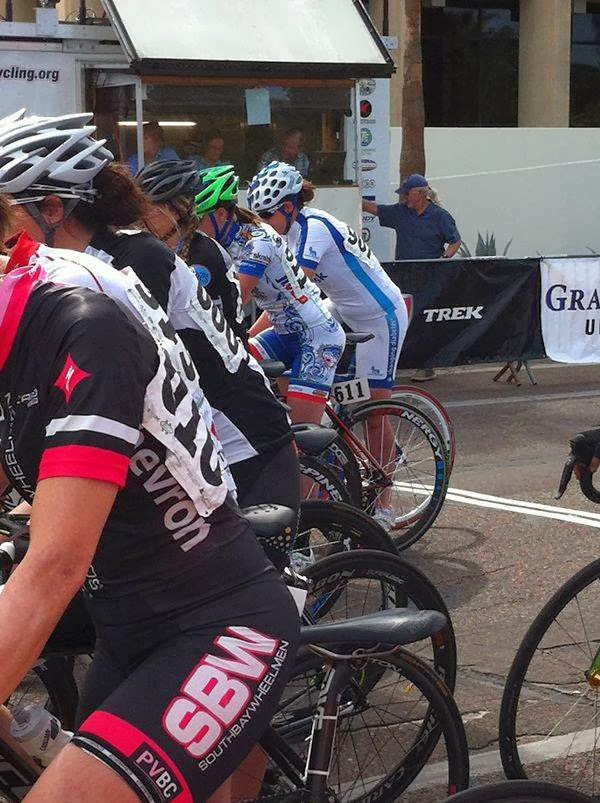
Leaving for an early morning race in 2008, when I was racing for Title Nine.
I was chatting with my friend and former teammate, Missy Foy, about the mental challenges of getting older before you are really ready to resign your sport. Missy is an elite athlete and a type 1 diabetic, who remains the only runner with diabetes to ever qualify for the Olympic Marathon Trials. We were talking about how, as you age, the challenges shift from juggling family and work, sleep and nutrition and training and travel, to focusing instead on the bigger internal questions about when and how to “age out” of competition. 

Missy has found that Ultra Running is a good solution…which makes sense. Endurance performance is more heavily dependent on sustainable energy production and fatigue resistance, which are based on cardiovascular and muscular changes that sometimes accompany age. That resistance to fatigue can translate to success when it comes to being an endurance athlete. It’s easier for many of us to win a 100 mile road race than a 100 meter dash. This also might explain why a lot of women are racing bikes well into their 30s and 40s.

Still, I feel like the clock moves faster every year. 

Goofing around on a ride.
 
I remember my friend Bobby telling me that he transitioned from bike racing to triathlon when he felt like he could no longer keep up with the younger professional men. When we were having that discussion three years ago, it was a decision that seemed so far off I could not imagine finding myself in his shoes. Now? I feel like I am racing time every single day.

There are so many opportunity costs that come with racing. It’s travel and time away from family. It’s the commitment to train 15, 20 hours every single week. And that comes on top of my business, my full-time job, my freelance work. Cycling has given me a lot, but it has also taken some things away. I wouldn’t trade my experiences, accomplishments, and the relationships I’ve had in cycling for anything, but then there are the injuries, the packing and unpacking, and the sacrifice of so much training to ride a bike faster…


Injuries are definitely part of the sport.
At the same time, bike racing still makes me happy. Even after all this time, I find I want most to be on my bike. The journey and process of working hard and getting better, coming back to the bike after so many years away, has shaped me and made me a better person. There are still things I want to accomplish in this sport, and I don’t feel ready to hang it up. Not yet, anyway. 

Time is a strange kind of pressure. It’s the pressure to weigh your goals, and then make them happen before it’s too late…before it all slips away to the oblivion of age. I have never wanted to stop the clock, but now? Now I feel like I am racing against it. My enemy is time. 


Training in the kitchen.
Last year, I decided not to do the Tour of the Gila on the advice of a good friend and professional who, candidly, told me I just wasn’t going to get a result given my fitness at that point in the season. This year, I looked at the race calendar, and realized that I might not have that many seasons ahead of me. If I wanted to tackle that race, if that made the short list of my goals, I needed to train for it now.  So, I pulled the trigger. 

I find myself planning my schedule with that race against time ever-present on my mind. The tape in my head plays the same phrase: “You won’t have that many chances ahead of you. Quit putting it off, because it will pass you by.” My training is always focused on being successful right now, because I know I don’t have years to build on these outcomes. It’s all about this moment, this season, this race.


It’s hard to think ahead, to a time when I might not be doing this at all. I remember a friend last season talk about pinning on a number to what might be the last Elite race of her career, and wondering what it must be like in the moment…and thinking about the process of coming to that day. As hard as it is to juggle the demands of the sport with the demands of living this life, the toughest journey seems to be the one that moves toward giving it all up. The slow movement toward that inevitable fact is definitely shaping my season and my goals.


Monday, March 3, 2014

Peg, Troy, Myself and Danial after the crit.
So, I started my race season by jumping in with both feet. I headed to Arizona for a stage race with some crazy fierce competition, and a few "borrowed" teammates from Colorado-based Psimet-Zilla Racing. These guys are FAST, and they know how to make the "seriousness" of bike racing a whole lot of fun. Six bike racers, a whole lot of bikes and gear, and warm Phoenix sun made for a great time. 

Danial got a cookie.


Some of the Psimet guys had great results. Two finished in the top ten overall, and Troy nearly had a top twenty in the criterium. Danial got mixed up in a little crash on the road race, and had an elbow the size of my leg. We kept telling him to "rub some dirt in it," but it turns out it was actually broken, and he's slated for surgery. Here's a piece of advice: Don't get hurt around other racers, because you get no sympathy, and just a lot of "war stories to commiserate." 

My own race? Not as awesome. The Road Race was such a mess that I ended up being offered the "pity feeds" in the feed zone, where other teams look at you with such sympathy as to try and hawk bottles and gels so you might magically get better and actually be competing with their racers. Seriously.

Here's an account with some commentary on losing, generally.


Open up the pages of any major cycling publication, and you’ll find articles on how to win a bike race. You can read about tactics and training, speed drills and bike handling, and how to climb better and faster and stronger. What you won’t find is an article about the single most important skill you can master in the sport of bike racing: How to Lose. No one writes articles on how to fall off the back, get lapped, how to put your head down as you ride alone through a feed zone to finish a race that is all but over or, worse, climb into the team car and call it a day because you are too far behind to make the time cut. And that’s too bad, because losing is not only an option in life, it is pretty much inevitable. 

Losing isn’t easy for anyone. It doesn’t matter if you are, like me, a naturally competitive person or someone who simply cares deeply about what you doing. No one aspires to defeat. And despite all the platitudes about sport being “just for fun,” we know that it is a lot more fun to win than it is to come in last. 

I kicked off my cycling season last weekend with a stage race in Arizona. I had marginal aspirations for the event. It’s still really early in the race calendar, and the competition included some of the top professional women in cycling. Still, my training plan has been much better this year than in years prior, and I have been a lot more dedicated to doing the hard work. The road race was well-suited to my abilities, and the criterium was a perfect match to my racing style. In all, I expected to find myself with at least a couple of top ten finishes. Had that transpired, I wouldn’t be writing this.


That would be Evelyn Stevens in the leader's jersey.The first 17 miles of the RR were at 60kph. FAST.


I spent three days struggling to make something happen. At every turn, I felt as though I was just trying to get through the day, to make time cuts, to race again tomorrow. I was crossing my fingers that the next race would be better. I am sure you are shocked to know that finger crossing doesn’t work and, by the last day of racing, I was both demoralized and tired. Within minutes of my final race, I was off the back and making the decision to pull the plug. I walked away disappointed. 

Part of what makes bike racing such an awesome sport is how tough it can be. It’s hard. Really hard. You have to love it in order to get through it. You have to be willing to struggle and sacrifice and, at the end of the day, summon the emotional maturity to accept losses and, even, embrace them positively. No amount of tantrums or displays lacking personal grace will change the fact of defeat, and perhaps the only thing worse than losing is being a bad loser. It’s important to learn to fail with dignity and make the most of every loss.
Diabetes has definitely done its part in making me resilient and well-balanced in the face of loss. After being diagnosed with Type 1, I felt as if I had to re-start my life with this new challenge, and I had to move past thinking that diabetes would ruin everything I had worked to achieve in terms of my racing. Disappointment and anger are natural responses to bad news or defeat, but I realized that the sooner I re-gained my stability, the better. Diabetes affirmed my ability to summon the needed resilience and courage to be gracious in my struggles. 

I started at the back, and I stayed there. Gives me the sadz.


I am pretty good at accepting reality. You have to be if you are going to get good with losing. I once had a coach who repeated “where there’s a will, there’s a way” as if it were a personal mantra. Unfortunately, we have less control over our lives than we’d like to believe. I can’t control a flat tire mid-race or the once-in-30-year-history torrential downpour at El Tour de Tucson. All the determination in the world won’t move me to the front of the pack if I am pinched in a corner at the back. You can choose to be burdened by past failures and things you cannot change, or you can move on and work with those elements in your control, make needed adjustments and get better at managing what is actually in your grasp. 

You also have to have some appreciation of effort and competition. Before my diagnosis, I never felt like it was enough to simply try my hardest. Effort, on its own, was of little importance. Then, I was diagnosed with Type 1, and I had a doctor tell me I would likely never race again because she mistakenly believed that the intensity of the sport would present too many challenges to my diabetes management. All of the sudden, just showing up to race a bike seemed like a huge accomplishment. No matter how much I wanted to win, I took pride in being there with everything I had to give on that day because there was so much uncertainty in getting there in the first place. Even now, all these years later, I can take comfort in trying my hardest and being beaten by someone who was better than me.

Losing has made me appreciate winning to a greater extent. In the sport of bike racing, you work to move up a bit at a time. You struggle to win and, just when the victories start to come more readily, you find yourself racing bigger events and tougher competition. You find yourself losing all over again. Those who succeed in the sport are those who have the ability to lose ten times over, and keep showing up. When you finally do make your way to the podium, it’s with the understanding that victory is temporal.  

The world is filled with disappointments, both big and small. Learning to accept loss without feeling crushed is a mark of maturity, and an important skill in navigating daily life.

John and Danial warming up before the TT.


I made my way back to the team car after the race. I hate pity, so we all agreed to focus instead on the better parts of the weekend. I took a few moments to enjoy the fact that I was there at all, racing some of the fastest women on the planet. I spent the rest of the long drive back to Colorado evaluating my training plans, and making adjustments based on the weekend results. Racing and training are dynamic and require constant changes in order to achieve results. I hope I have some winning ahead of me this season, but I am prepared to make the most of my losses, too.